14 March
Interior
Kids’ Room Interior Design Ideas That Balance Fun and Functionality
- Vinigabb
- Room Interior Design
- 0 Comments
Designing a kid’s room is both exciting and challenging. Unlike other rooms in the house, a child’s bedroom needs to balance creativity, safety, comfort, and practicality. It should be a place where children can sleep peacefully, study productively, play freely, and express their imagination.
A well-designed kids’ room supports a child’s development while staying organized and visually appealing. The key is to create a space that grows with your child while maintaining functionality. Here are some thoughtful interior design ideas that combine fun and practicality for modern kids’ rooms.
1. Choose a Flexible Color Palette
Colors play a big role in shaping the mood and energy of a kid’s room. Bright colors can stimulate creativity, while softer tones promote calmness and focus.
Instead of overly vibrant walls that may feel overwhelming over time, consider a balanced palette such as:
- Soft pastel blues, greens, or yellows
- Neutral base colors like white or beige
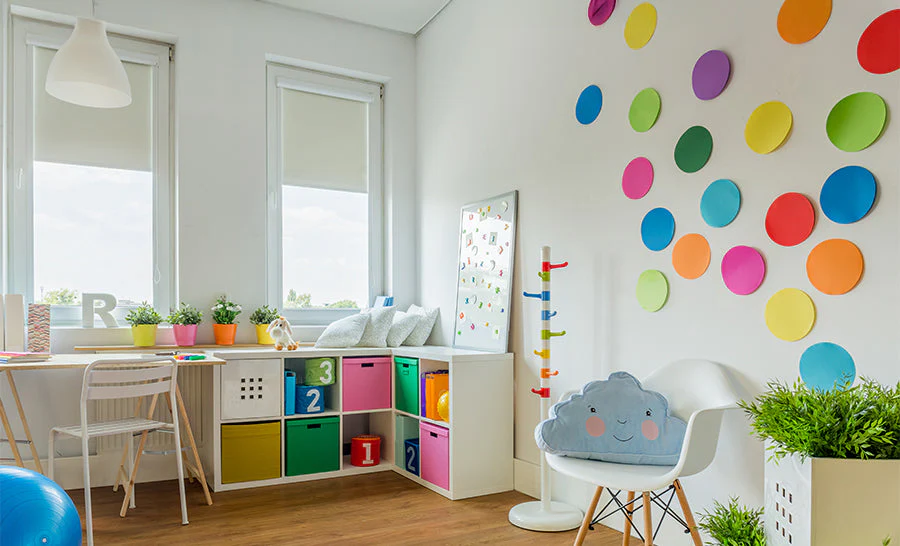
- Accent walls with playful patterns
A neutral base allows you to update the room easily as your child grows, simply by changing accessories or décor.
2. Invest in Multi-Functional Furniture
Kids’ rooms often have limited space, so furniture should serve multiple purposes.
Examples of multi-functional furniture include:
- Beds with built-in storage drawers
- Study desks with attached bookshelves
- Bunk beds for shared rooms
- Foldable desks for compact spaces
These designs maximize space while keeping the room organized. Functional furniture also helps reduce clutter and provides more room for play.
3. Create a Dedicated Study Zone
As children grow, a comfortable study area becomes essential. A well-designed study corner encourages focus and discipline.
Tips for an Effective Study Space:
- Place the study desk near a window for natural light
- Use adjustable chairs for proper posture
- Install wall shelves to store books and supplies
- Add a pinboard or whiteboard for creativity
Keeping the study area separate from the play zone helps children maintain concentration.
4. Design a Fun Play Area
Play is an important part of childhood. Creating a designated play area allows kids to explore their imagination freely.
You can add elements like:
- Soft rugs or foam mats
- Toy storage baskets
- Small tents or playhouses
- Chalkboard walls or art corners
These features encourage creativity while keeping toys contained within one area of the room.
5. Use Smart Storage Solutions
Kids tend to accumulate toys, books, clothes, and art supplies quickly. Without proper storage, the room can easily become cluttered.
Smart Storage Ideas:
- Under-bed storage boxes
- Wall-mounted shelves
- Toy organizers with labeled compartments
- Built-in wardrobes with adjustable sections
Accessible storage also teaches children the habit of keeping their room tidy.
6. Add Personalization and Creativity
A kid’s room should reflect their personality and interests. Personal touches make the space more meaningful and enjoyable.
Ideas for personalization include:
- Wall decals of favorite characters or themes
- Customized name boards
- Framed artwork created by the child
- Themed bedding and curtains
These decorative elements create a joyful environment while allowing children to feel connected to their space.
7. Ensure Safety in Design
Safety should always be a top priority when designing children’s rooms.
Important Safety Tips:
- Use furniture with rounded edges
- Secure heavy furniture to the wall
- Choose non-toxic paints and materials
- Avoid slippery flooring
- Install proper lighting for nighttime visibility
These precautions ensure a safe and comfortable environment for children.
8. Focus on Lighting
Lighting plays an important role in both functionality and mood.
Layered Lighting Works Best:
- Ambient lighting for overall brightness
- Task lighting for the study area
- Soft night lights for comfort during sleep
Warm lighting can make the room feel cozy and welcoming while helping children relax before bedtime.
9. Design a Room That Grows with Your Child
Children grow quickly, and their needs change over time. Instead of designing a room that suits only one age group, aim for a flexible design.
For example:
- Choose adjustable furniture
- Use neutral wall colors
- Add décor elements that can be replaced easily
This approach ensures the room remains functional and stylish for years.
10. Encourage Organization and Responsibility
Design can influence behavior. By creating organized storage systems and clearly defined spaces, children learn responsibility.
Simple habits like putting toys back in baskets or arranging books on shelves can become part of daily routines. A well-designed room supports independence and discipline.
Conclusion
Designing a kids’ room is about creating a space that supports learning, creativity, and comfort. By combining playful elements with practical furniture, smart storage, and safe materials, you can achieve a perfect balance between fun and functionality.
The goal is not just to make the room look beautiful but to create an environment where children can grow, learn, and express themselves freely. With thoughtful planning and flexible design choices, a kids’ room can become one of the most joyful and inspiring spaces in the home.
Related Posts