11 February
Home style
Lighting Design 101: Transforming Your Home with Smart Lighting
- Vinigabb
- Smart Lighting
- 0 Comments
Lighting is one of the most powerful yet underestimated elements in interior design. While furniture, colors, and décor define style, lighting defines mood, depth, and functionality. The right lighting design can make a small room look spacious, highlight architectural details, create warmth, and even influence your emotional well-being.
In modern homes, lighting is no longer just about visibility—it’s about smart planning and layered illumination. Whether you are renovating or designing a new home, understanding the fundamentals of lighting design can completely transform your living space.
Understanding the Basics of Lighting Design
Good lighting design is based on three primary layers:
1. Ambient Lighting (General Lighting)
This is the main source of light in a room. It provides overall illumination and ensures visibility.
Examples include:
- Ceiling lights
- LED panel lights
- Chandeliers
- Cove lighting
Ambient lighting sets the foundation, but on its own, it can feel flat and uninspiring.
2. Task Lighting (Focused Lighting)
Task lighting is used for specific activities such as reading, cooking, studying, or grooming.
Examples include:
- Desk lamps
- Under-cabinet kitchen lights
- Bedside reading lights
- Vanity lights in bathrooms
It improves functionality and reduces eye strain while performing daily tasks.
3. Accent Lighting (Decorative Lighting)
Accent lighting highlights artwork, textured walls, shelves, or architectural features.
Examples include:
- Spotlights
- Wall washers
- LED strip lights
- Picture lights
Accent lighting adds drama and depth to interiors, making them visually appealing.
Why Smart Lighting Matters
Smart lighting is the future of home design. It combines technology with aesthetics to offer control, energy efficiency, and personalization.
Benefits of Smart Lighting:
- Remote control via mobile apps
- Voice control with smart assistants
- Adjustable brightness levels
- Color temperature customization
- Energy savings
- Scheduled lighting automation
Smart lighting systems allow homeowners to change the mood of a room instantly—from bright and productive to warm and relaxing.
Room-by-Room Smart Lighting Guide
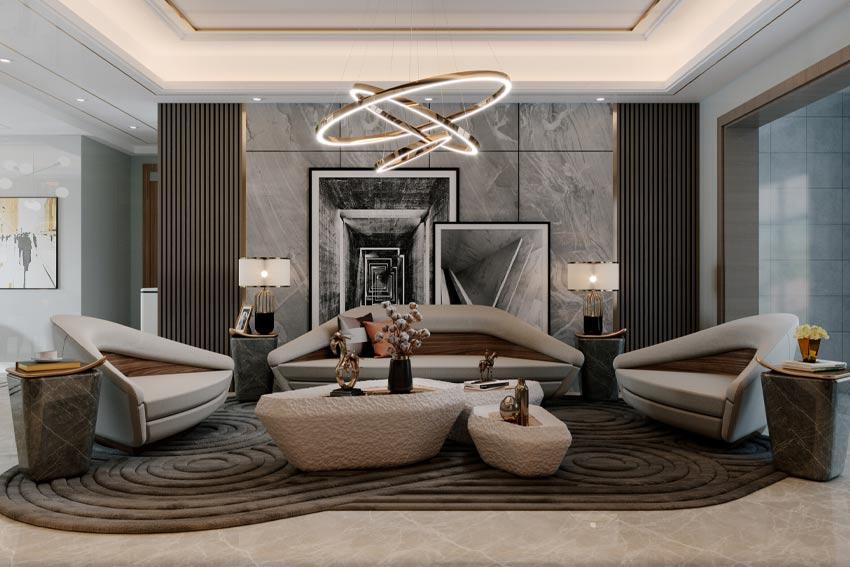
Living Room Lighting
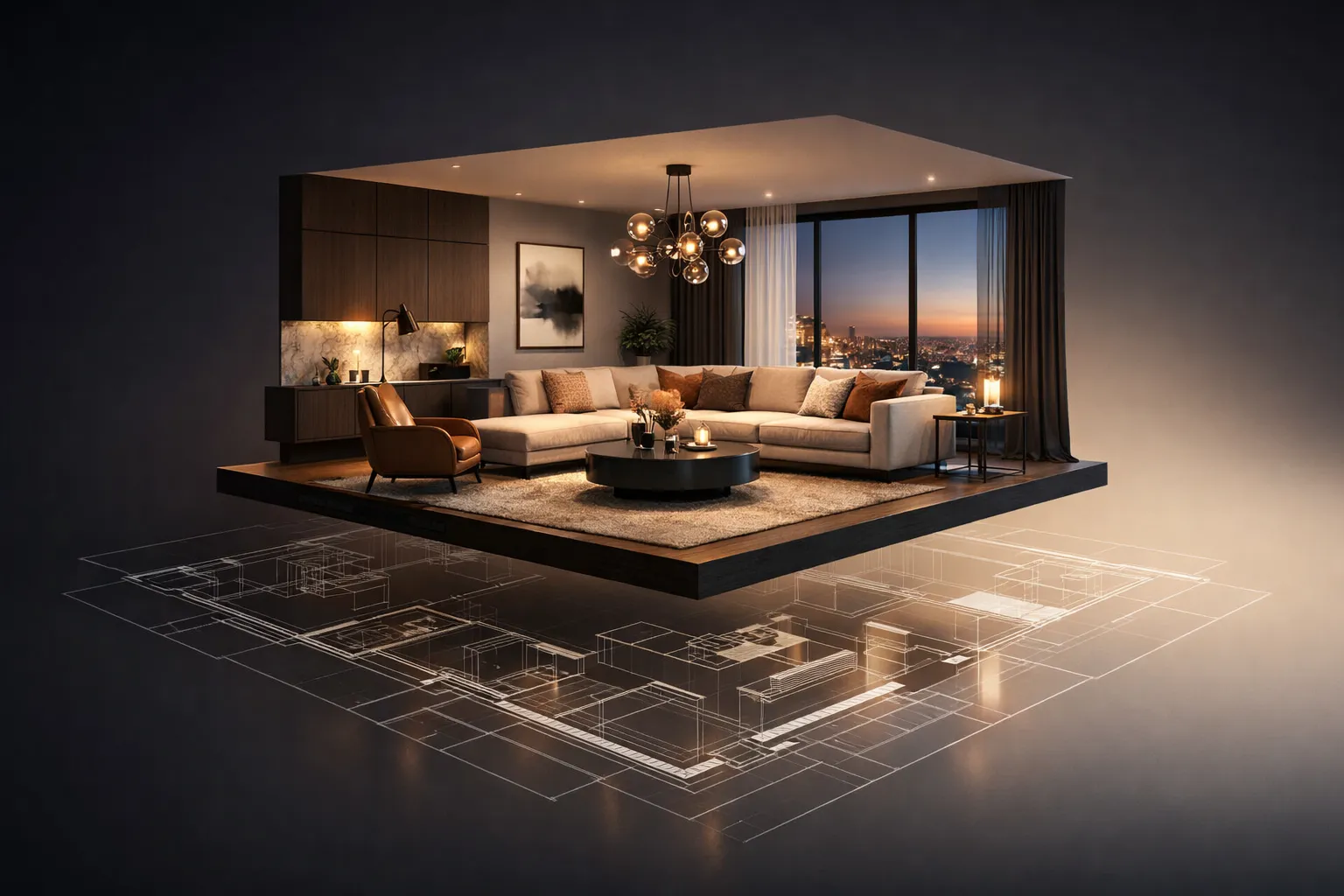
The living room is the heart of the home. It needs flexible lighting that adapts to different activities—watching TV, hosting guests, or relaxing.
Best lighting ideas:
- Cove lighting for soft ambient glow
- Floor lamps for cozy corners
- Accent lights to highlight décor
- Dimmable ceiling lights for mood control
Using layered lighting makes the space feel inviting and balanced.
Bedroom Lighting
Bedrooms should promote relaxation and comfort.
Recommended approach:
- Warm ambient lighting
- Bedside lamps or wall-mounted reading lights
- LED strip lighting behind headboards
- Avoid harsh white light
Smart dimmers allow you to control brightness according to your mood.
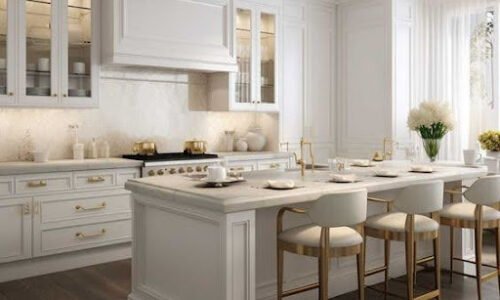
Kitchen Lighting
The kitchen requires a mix of bright and focused lighting.
Smart solutions include:
- Under-cabinet LED strips
- Pendant lights over islands
- Bright overhead lighting
- Motion-sensor pantry lights
Proper kitchen lighting enhances safety and improves cooking efficiency.
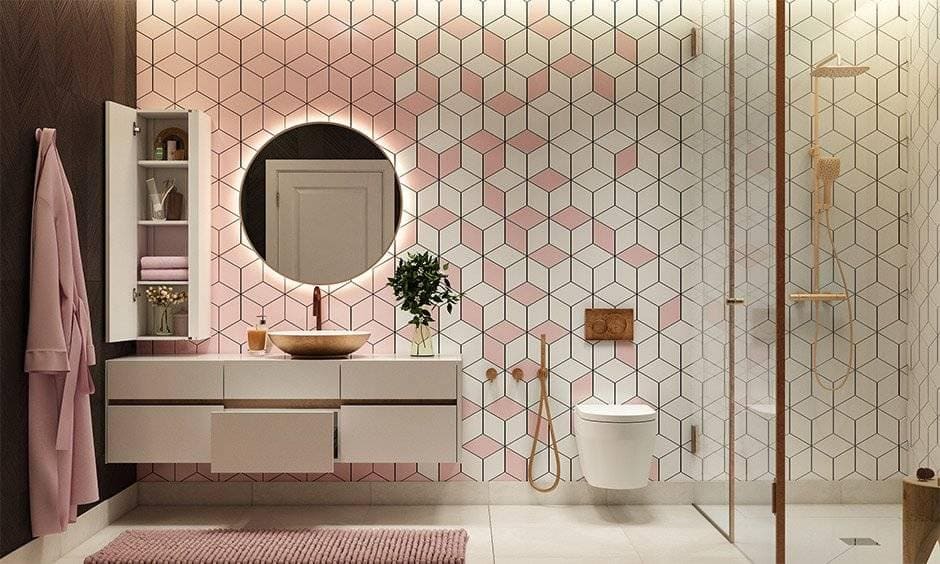
Bathroom Lighting
Bathrooms require clarity without harshness.
Ideal options:
- LED mirrors with built-in lights
- Vanity lighting around mirrors
- Waterproof recessed lights
- Neutral white lighting for grooming
Layered lighting prevents shadows and enhances usability.
Choosing the Right Color Temperature
Light color temperature affects the mood of a room. It is measured in Kelvin (K).
- Warm White (2700K–3000K): Cozy and relaxing (ideal for bedrooms and living rooms)
- Neutral White (3500K–4000K): Balanced and practical (ideal for kitchens and bathrooms)
- Cool White (5000K+): Bright and energizing (ideal for study rooms and offices)
Choosing the right temperature ensures harmony and comfort.
Maximizing Natural Light
Before investing heavily in artificial lighting, make the most of natural light.
- Use sheer curtains
- Keep windows unobstructed
- Add mirrors to reflect daylight
- Choose light wall colors
Natural light improves mood and reduces energy consumption.
Energy Efficiency and Sustainability
LED lights are the most energy-efficient lighting solution available today. They consume less electricity and last longer than traditional bulbs.
Benefits of LED lighting:
- Lower electricity bills
- Minimal heat emission
- Longer lifespan
- Eco-friendly
Smart lighting systems combined with LED technology create sustainable homes.
Common Lighting Mistakes to Avoid
Even well-designed homes can suffer due to poor lighting choices.
Avoid these mistakes:
- Using only one light source per room
- Ignoring dimmer switches
- Choosing the wrong color temperature
- Over-lighting small spaces
- Placing lights without planning shadow angles
Proper lighting planning during interior design prevents these issues.
Smart Lighting Trends for 2026
Modern lighting trends are evolving rapidly.
Popular Trends Include:
- Minimalist pendant lights
- Hidden LED strips
- Voice-controlled lighting
- Motion sensor lights
- Geometric lighting fixtures
- Smart color-changing LEDs
These trends enhance both aesthetics and convenience.
Conclusion
Lighting is not just a functional necessity—it is a design statement. The right lighting transforms your home, enhances comfort, and elevates your lifestyle. By understanding ambient, task, and accent lighting, and integrating smart technology, you can create dynamic spaces that adapt to your needs.
Smart lighting allows you to personalize your environment, save energy, and improve functionality. Whether designing a new home or upgrading an existing one, investing in thoughtful lighting design is one of the most impactful decisions you can make.
A well-lit home is not just brighter—it feels warmer, larger, more welcoming, and truly complete.
Related Posts